

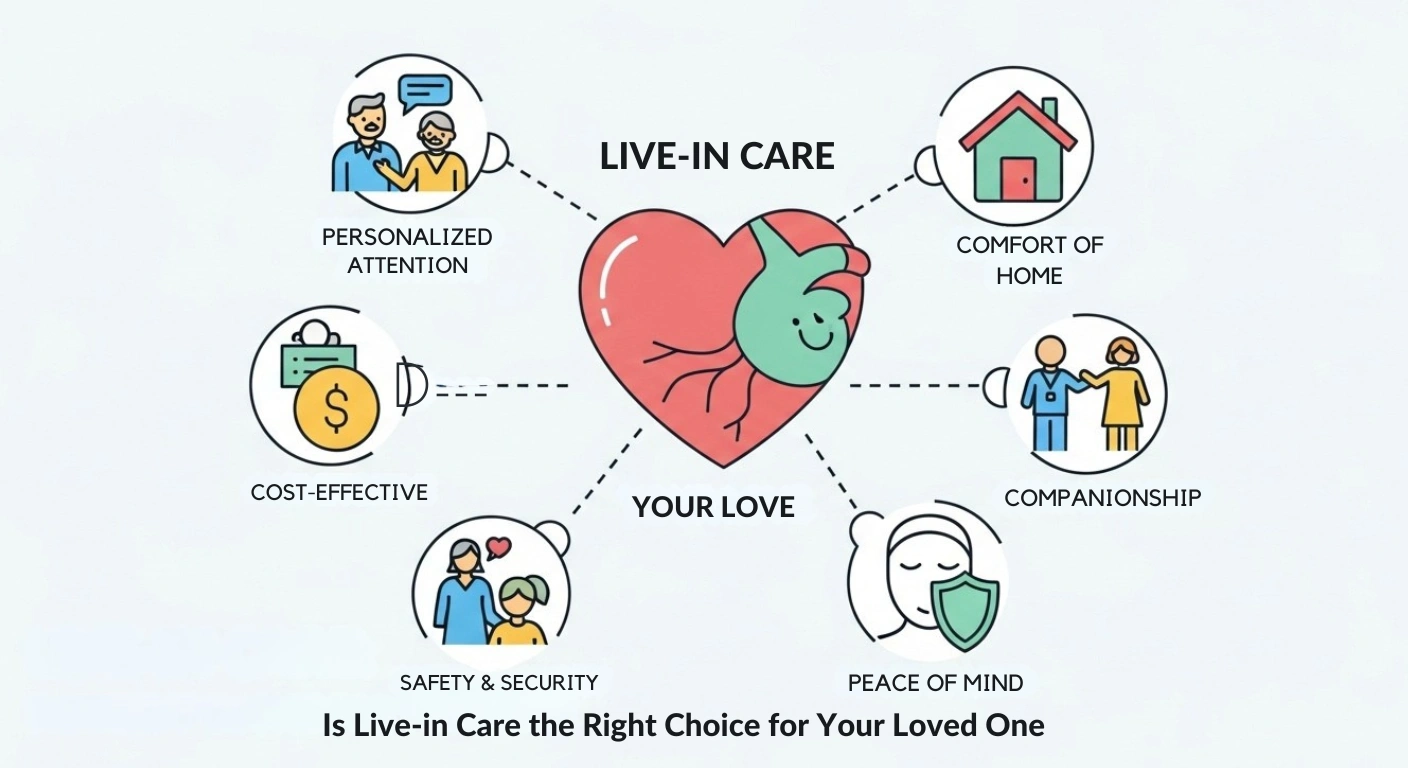
Contemplating what to do with an aging parent or loved one leaves a person feeling as if they are at the center of a crossroads blindfolded. You want the best for them, but the options can be endless nursing homes, assisted living, hourly caregivers or live-in care. If you have been wondering whether live-in care could be the answer, you’re not alone. It’s a question millions of families confront every year.
This guide will take you through all you need to know about live-in care from when it’s the right time to consider it, how much it costs and what the benefits are versus other options. At the end, you will have a better sense of whether this is something that would work for your family’s specific circumstances.
What Exactly Is Live-in Care?
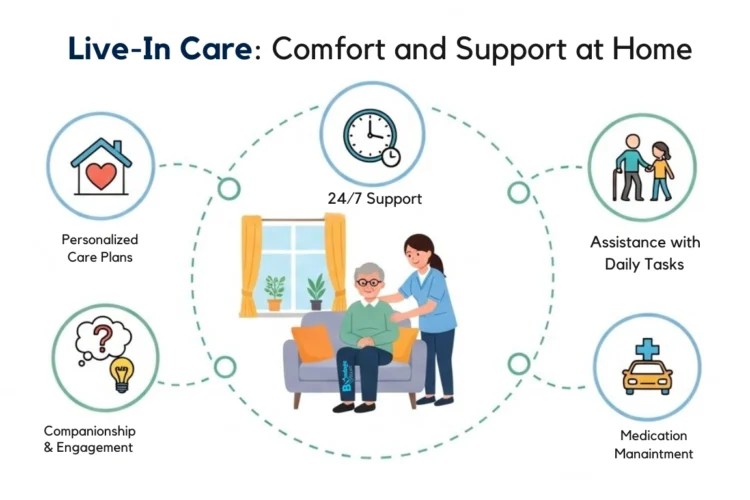
Live-in care is when a professional caregiver goes to live in your loved one’s home and provides assistance 24 hours a day. Unlike an hourly aide who comes and goes, a live-in caregiver puts down roots and generally works four or five days consecutively before another caregiver arrives.
Here is the key distinction that can confuse many families: Live-in care is not 24-hour care. If they are live-in, carers require at least 5 to 8 hours’ sleep a night. They are inside the house during those hours, and can respond to emergencies, but they are not actively providing care. Full 24-hour care involves more than one caregiver, who work in shifts because someone must remain awake and alert at all times.
The live-in arrangement is perfect for seniors who are relatively stable at night, but need assistance throughout the day with things like meals, reminders to take medications, personal care support, companionship and light housekeeping. If your loved one requires help during the night for issues such as wandering, or 24-hour bathroom assistance, a 24 hour care is preferable.
What Live-in Caregivers Actually Do
A common misconception is that live-in caregivers only handle medical tasks. In reality, their role is much broader and more personal. Think of them as a combination of a helpful roommate, personal assistant, and trained care professional.
Activities of Daily Living (ADLs) include:
- Bathing and showering assistance
- Dressing and grooming help
- Toileting and incontinence care
- Mobility support and fall prevention
- Feeding assistance when needed
Instrumental Activities of Daily Living (IADLs) include:
- Meal planning and preparation tailored to dietary needs
- Light housekeeping and laundry
- Medication reminders (not medical administration)
- Transportation to appointments and social activities
- Grocery shopping and errands
- Companionship through conversation and shared activities
That last point companionship shouldn’t be underestimated. Research consistently shows that one in three older adults lacks meaningful companionship, and loneliness can accelerate both physical and cognitive decline. A good live-in caregiver becomes much more than hired help; they become a trusted presence that keeps isolation at bay.
Ten Warning Signs Your Love One May Need Live-in Care
Families often struggle to identify the right moment to bring in additional support. Nobody wants to jump the gun and take away independence prematurely, but waiting too long creates safety risks. Watch for these indicators:
- Changes in personal hygiene – appearing disheveled, body odor, wearing same clothes repeatedly
- Unexplained bruises or injuries – often pointing to unreported falls
- Difficulty managing medications – pills scattered around, wrong doses, unfilled prescriptions
- Struggling with meal preparation – weight loss, expired food, poor nutrition
- Unpaid bills and financial confusion – collection notices, inability to explain expenses
- Withdrawal from activities – avoiding hobbies and social events they once enjoyed
- Getting lost in familiar places – confusion about locations, time, or dates
- House showing signs of neglect – piled mail, unwashed dishes, general disarray
- Increased agitation or personality changes – unusual arguments, suspicion, mood swings
- Caregiver burnout in family members – exhaustion from trying to provide care alone
How Live-in Care Compares to Other Options
Families weighing live-in care typically consider several alternatives. Understanding how each option stacks up helps you make a more informed choice.
Live-in Care versus Assisted Living Facilities:
Assisted living communities provide housing, meals, and various levels of personal care support. The national median cost runs around $6,129 per month for a private one-bedroom apartment, though this varies significantly by location and amenity level.
Advantages of live-in care over assisted living:
- Often costs less while keeping your loved one at home
- Preserves familiar surroundings, routines, and possessions
- One-on-one personalized attention rather than shared staff
- Greater flexibility in daily schedules
- Pets and personal belongings stay with them
Advantages of assisted living over live-in care:
- Built-in social community and group activities
- On-site amenities like fitness centers and dining halls
- No home maintenance responsibilities
- Immediate access to staff around the clock
- Structured programming and engagement
Live-in Care versus 24-Hour Home Care:
Twenty-four-hour care ensures someone is always awake and alert, using multiple caregivers working in shifts. This comprehensive coverage comes with a higher price tag the national median runs approximately $24,006 per month.
Choose live-in care when:
- Your loved one sleeps relatively peacefully through the night
- Overnight needs are minimal or occasional
- Budget is a significant concern
- Consistency with fewer caregivers is preferred
Choose 24-hour care when:
- Frequent nighttime assistance is required
- Wandering or safety concerns exist overnight
- Constant supervision is medically necessary
- Your loved one has unpredictable care needs
Live-in Care versus Nursing Homes:
(Interestingly, nursing homes offer the most in terms of care, including skilled medical care.) Costs can total upwards of approximately $111,325 per year for a semi-private room; private rooms are more still.
It is not the intention for live-in care to serve as a replacement for skilled nursing. If your loved one requires wound care, IV drugs, physical therapy or other medical treatment, a nursing home/ home health nursing would be more suitable.
Breaking Down the True Cost of Live-in Care
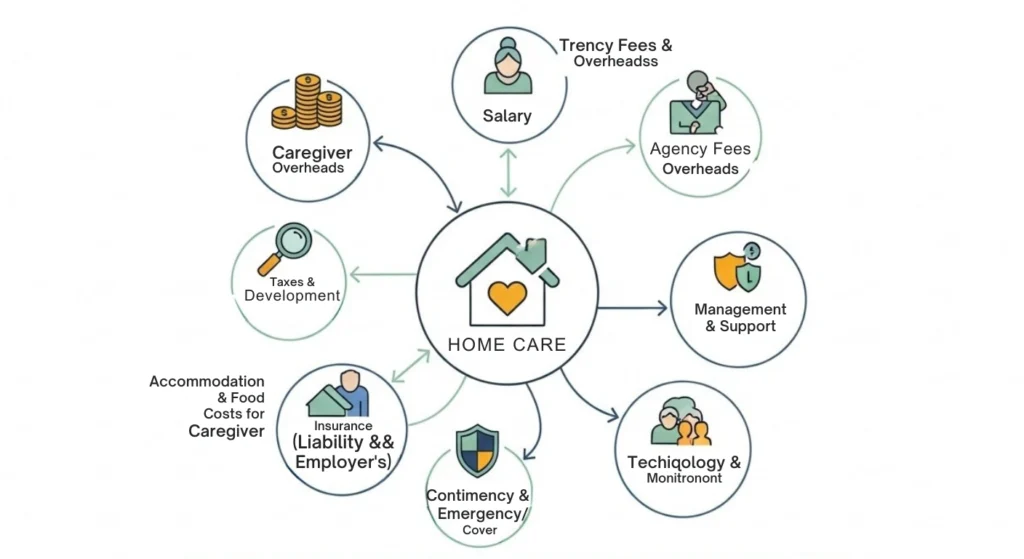
Money matters, and families need realistic cost expectations to plan appropriately. Live-in care costs range widely from about $1,000 to $6,000 monthly depending on several factors.
Key factors affecting live-in care costs:
- Geographic location (urban areas cost more than rural)
- Level of care complexity required
- Agency hire versus independent hire
- Caregiver experience and qualifications
- Additional specialized skills (dementia training, etc.)
Hidden costs to consider:
- Room and board for the caregiver
- Potential home modifications (grab bars, ramps, stair lifts)
- Backup care coverage for caregiver time off
- Increased utility costs
- Supplies and equipment
When comparing costs, remember that live-in care eliminates some expenses that come with facility living. You’re not paying facility housing costs, and your loved one continues using their existing home.
Paying for Live-in Care Your Options
Most families piece together payment from multiple sources. Understanding what’s available helps you build a realistic financial plan.
- Personal savings and income – Social Security, pensions, retirement accounts, general savings
- Long-term care insurance – Review policy terms; coverage and waiting periods vary widely
- Medicaid waiver programs – Some states offer home-based care support for qualifying individuals
- Veterans benefits – Aid and Attendance pension helps qualifying veterans and spouses
- Reverse mortgages – Converts home equity into funds for care costs
- Life insurance conversion – Some policies allow conversion to long-term care benefits
- Family contributions – Pooling resources among siblings or relatives
Important note: Medicare generally doesn’t cover live-in care since it focuses on medical services rather than personal care assistance.
Special Considerations for Dementia and Alzheimer’s Care
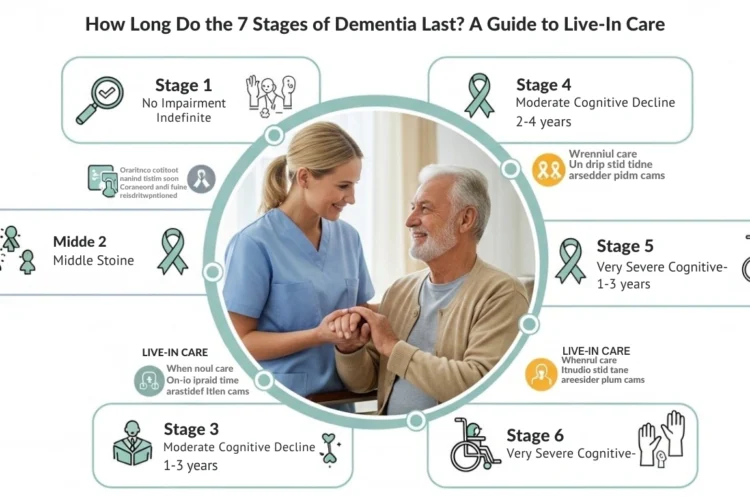
Live-in care can work well for early to moderate dementia, but the arrangement requires special attention. People with memory conditions benefit enormously from staying in familiar environments surrounded by recognizable belongings and established routines.
Benefits of live-in care for dementia:
- Familiar home environment reduces confusion and anxiety
- Consistent caregivers (1-2 people) rather than rotating staff
- Personalized routines tailored to individual needs
- One-on-one attention and supervision
- Preserved independence as long as safely possible
Signs dementia has progressed beyond live-in care capabilities:
- Frequent nighttime wandering or restlessness
- Aggressive or physically combative episodes
- Inability to recognize caregivers or family members
- Requiring hands-on assistance for every basic task
- Medical complications requiring skilled nursing intervention
When these signs appear, transitioning to memory care or 24-hour care with dementia-trained staff becomes necessary for everyone’s safety.
Making the Transition Smooth
Bringing someone new into your loved one’s home creates adjustment stress even when everyone involved has the best intentions.
Tips for a successful transition:
- Involve your loved one in caregiver selection when possible
- Start gradually with daytime hours before full live-in arrangement
- Maintain existing routines and schedules
- Keep personal items and room setup familiar
- Stay involved with regular visits and phone calls
- Allow several weeks for adjustment before evaluating
- Communicate openly with the caregiver about concerns
- Celebrate small wins and positive moments
FAQs
How is live-in care different from 24-hour care?
Live-in caregivers require 5-8 hours of sleep and are present but not actively caring overnight. 24-hour care uses shift rotations so someone is always awake, costing significantly more.
What does a live-in caregiver actually do?
They assist with bathing, dressing, meals, medication reminders, housekeeping, transportation, errands, and companionship based on your loved one’s specific needs.
How much does live-in care cost compared to nursing homes?
Live-in care ranges from $1,000 to $6,000 monthly, while nursing homes average over $100,000 annually making live-in care significantly more affordable.
Does Medicare pay for live-in caregivers?
No. Medicare covers medical services, not custodial care. Some Medicaid waiver programs and long-term care insurance may provide coverage.
What if my loved one and the caregiver don’t get along?
Request a different caregiver through your agency, or restart your search if you hired independently. Compatibility is essential for success.
Is my home suitable for live-in care?
You need a private sleeping space for the caregiver and reasonable accessibility for your loved one’s mobility level. Modifications can often address limitations.
Can live-in care work for couples?
Yes, and it’s often more cost-effective. One caregiver can assist both people, though complex needs may require additional support.
What happens if the caregiver gets sick?
Agencies provide backup coverage. Independent arrangements require you to have a backup plan with secondary caregivers or family members.
Final Thoughts
It is never an easy decision to make the transition to live-in care, but nor does it have to be a daunting one. When your friend or family member requires more support than you and the rest of the family can provide, live-in care delivers a caring alternative that enables them to maintain their independence while remaining in familiar surroundings and receiving all the help they need to stay safe comfortable. Have an honest heart-to-heart about your needs and those of your loved one, in addition to accepting help is not a form of failure it’s the guarantee that the person you love will receive great care with quality of life intact because dignity and autonomy are what matter most.