


It’s barely 6 AM and you’re already on your feet. Your mom needs help getting out of bed. By 7, you’ve sorted her medication, made breakfast, and started laundry. Lunch with a friend? Canceled again. Your own doctor’s appointment? Pushed back for the third time.
You are not alone in this. Around 53 million Americans are serving as unpaid family caregivers right now. Most of them are running on empty and refusing to ask for help. That’s exactly where respite care comes in and it might just change everything for you and your family.
What Is Respite Care?
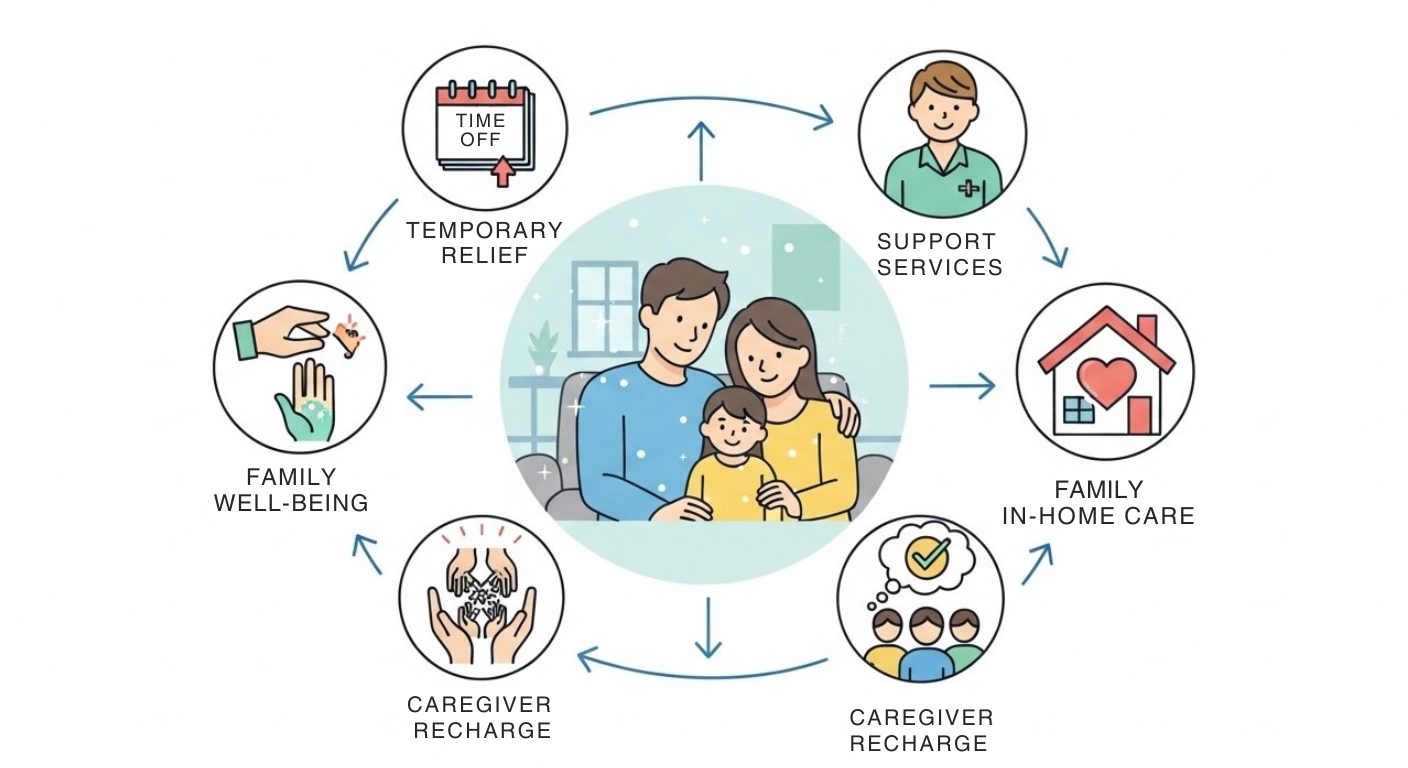
Respite care is a temporary break from caregiving. Someone else steps in a professional, a volunteer, a friend, or a facility to look after your loved one while you step away.
That break could be a few hours on a weekday afternoon or a full week while you take a vacation. The goal isn’t to walk away permanently. It’s to recharge so you can come back stronger and more present.
Think of it like charging your phone. You wouldn’t expect it to run forever at 5% battery. So why do you expect that from yourself?
Despite its clear value, about 85% of caregivers never use formal respite services. Over a third say they want this support but never access it. That gap needs to close and understanding the benefits is the first step.
The Caregiver Burnout Crisis
Before we get into the benefits, let’s address something important. Caregiving is more than tiring. It’s the kind of exhaustion that settles deep into your body, clouds your thinking, and slowly chips away at who you are.
Here are some numbers that tell the real story:
- Over 60% of caregivers experience burnout symptoms
- Between 40% and 70% show clinical signs of depression
- Nearly 1 in 4 say caregiving has hurt their physical health
- Only 23% of family caregivers rate their mental health as “good”
- The average caregiver spends about 25 hours per week on caregiving tasks
- 25% of caregivers dedicate more than 40 hours weekly
That’s a full-time job stacked on top of work, parenting, bills, and relationships. No wonder so many caregivers feel like they’re drowning. Respite care directly tackles this crisis by giving you room to breathe before the next wave hits.
Mental Health Protection
One of the strongest benefits of respite care for families and caregivers is what it does for your mental health. When you’re stuck in a caregiving loop day after day, your world gets smaller. Friends drift away. Hobbies vanish. You stop being “you” and become “the caregiver.”
Respite care breaks that cycle. Even a few hours away lets your brain decompress. You can grab coffee with a friend, read a book in the park, or just sit in silence. For someone who hasn’t had a quiet moment in months, that feels like oxygen.
Caregivers who regularly use respite services report lower distress and a stronger sense of well-being. That’s not surprising. You wouldn’t run a marathon without water stations and caregiving is absolutely a marathon.
Physical Health Benefits
Mental health gets most of the attention in caregiving conversations. But the physical toll is just as dangerous and far more overlooked.
Caregivers routinely neglect their own bodies. They skip check-ups, delay surgeries, ignore warning signs, and sacrifice sleep. Over time, this catches up in serious ways.
Common physical health risks for caregivers include:
- Heart disease and high blood pressure
- Chronic pain and fatigue
- Weakened immune system
- Sleep disorders and insomnia
- Weight gain or loss from poor eating habits
Respite care gives you time to finally see your dentist, get a full night’s sleep, exercise, or cook a proper meal. These sound basic, but for many caregivers, they’re life-changing.
It Actually Makes You a Better Caregiver
Here’s something that surprises most people. Walking away from caregiving for a bit actually makes you better at it.
When you’re running on empty, your patience thins. Your focus slips. Small irritations become big blow-ups. You snap at the person you love, then drown in guilt afterward.
After a respite break, caregivers consistently return with renewed energy, sharper attention, and a fresh perspective. Tasks that felt impossible before suddenly seem manageable. You’re kinder, calmer, and more present.
A surgeon doesn’t operate for 72 hours straight because everyone knows fatigue causes mistakes. The same rule applies to caregiving. Rest isn’t a luxury it’s a job requirement.
Benefits for the Person Receiving Care
Most respite care conversations focus on the caregiver. But your loved one benefits too often in ways you wouldn’t expect.
When someone receives care from a new person or visits an adult day program, they get fresh social interaction. New faces, different activities, and a change of scenery can be genuinely stimulating.
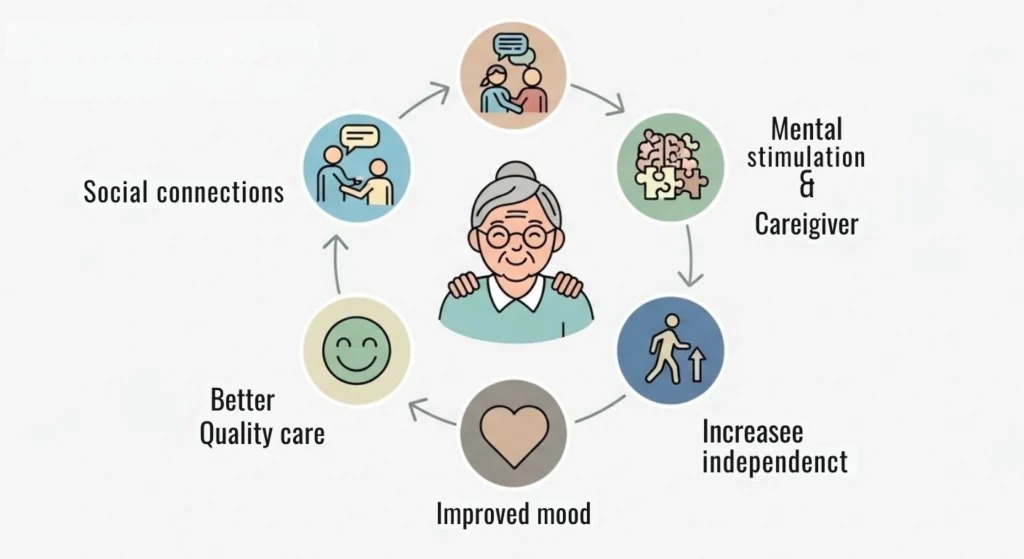
Key benefits for care recipients include:
- New social connections and conversations
- Mental stimulation from different activities and environments
- Improved mood from variety in their daily routine
- Better quality care from a rested, refreshed caregiver
- Increased independence and confidence
Social engagement is especially valuable for older adults and people with cognitive conditions. Your loved one might enjoy the experience more than you’d expect and that takes a big chunk of guilt off your plate.
Types of Respite Care Available
Not all respite care looks the same, and that’s a good thing. Different families need different solutions. Here’s a breakdown of your main options.
In-Home Respite Care:
A trained professional or volunteer comes to your home to handle caregiving while you step out. Your loved one stays in a familiar setting, and you don’t have to worry about transportation. This works best for people with mobility issues or anxiety about unfamiliar places.
Adult Day Services:
These are structured daytime programs at community centers or specialized facilities. Your loved one gets supervised activities, meals, socialization, and sometimes medical support while you handle your own responsibilities. Great for caregivers who work during the day.
Residential or Overnight Respite:
Your loved one stays temporarily at an assisted living community or nursing facility. This fits longer breaks like weekend trips or extended rest periods. Veterans may qualify for up to 30 days of nursing home respite per year through the VA.
Informal Respite:
Friends, neighbors, and family members pitch in to share the load. Maybe a sibling takes over every Saturday, or a neighbor helps with errands. It’s the most accessible and affordable option for many families.
Virtual and Creative Respite:
This newer option grew during the pandemic. Some programs offer video-based supervision, curated activity kits, or virtual field trips that keep your loved one engaged while you rest all without leaving the house.
| Feature | In-Home Respite | Adult Day Services | Residential Respite |
|---|---|---|---|
| Location | Your home | Community center or facility | Assisted living or nursing home |
| Duration | Few hours to several days | Daytime hours (up to 8 hours) | One night to several weeks |
| Best For | Loved ones who prefer home | Caregivers working during the day | Extended caregiver breaks |
| Social Interaction | Limited (one-on-one) | High (group activities) | Moderate to high |
| Approximate Cost | $15–$40/hour | $50–$150/day | $150–$400+/day |
| Medical Support | Basic to moderate | Often includes health monitoring | Skilled nursing available |
| Insurance Coverage | Some Medicaid waivers | Some Medicaid and VA coverage | Medicare covers under hospice; VA up to 30 days |
How to Pay for Respite Care
Cost is one of the biggest reasons caregivers avoid respite care. But there are more financial options than most people realize.
Here are the main funding sources worth exploring:
- Medicaid HCBS Waivers — Many states include respite coverage through Home and Community Based Services waivers. Check with your state Medicaid office for eligibility.
- Veterans Affairs (VA) — Veterans can access in-home, adult day, and nursing home respite. Caregivers may also qualify for VA Caregiver Support Program benefits.
- National Family Caregiver Support Program — Managed through local Area Agencies on Aging, this program funds respite services and caregiver counseling in many communities.
- Medicare Hospice Benefit — Standard Medicare covers up to 5 consecutive days of inpatient respite for patients receiving hospice care. Some Medicare Advantage plans offer additional respite coverage.
- Long-Term Care Insurance — If your loved one holds a policy, check whether respite care is included in the benefits.
- Nonprofits and Community Groups — Organizations like Easter Seals, the Alzheimer’s Association, and local faith-based groups often provide free or low-cost respite services.
| Funding Source | Who Qualifies | What It Covers | How to Access |
|---|---|---|---|
| Medicaid HCBS Waivers | State Medicaid eligible individuals | In-home and community respite | State Medicaid office |
| Veterans Affairs | Enrolled veterans | In-home, adult day, nursing home (up to 30 days/year) | VA social worker |
| National Family Caregiver Support Program | Caregivers of adults 60+ | Respite, counseling, support | Local Area Agency on Aging |
| Medicare Hospice | Hospice patients | Up to 5 days inpatient respite | Hospice provider |
| Long-Term Care Insurance | Policyholders with respite benefits | Varies by policy | Review policy or call insurer |
| Nonprofit Programs | Varies by organization | Free or subsidized respite | Local search or national organizations |
Why Caregivers Resist Taking a Break
Knowing about respite care and actually using it are two completely different things. If you’ve been avoiding it, you’re not alone. Here’s what usually holds caregivers back.
- Guilt tops the list. You feel like you should handle everything yourself. Taking a break feels like failure or abandonment. But guilt is a liar. Resting doesn’t mean you love your family member any less. It means you’re making sure you’ll be around long enough to keep caring for them.
- Trust issues come next. You’ve spent months learning exactly how your loved one likes things done. Handing that over to a stranger feels scary. The fix? Start small. Try a few hours, leave detailed notes, and build trust gradually.
- Financial worries are legitimate but often based on assumptions. Many caregivers never explore the funding options we covered above.
- The “nobody can do it like me” mindset is understandable but limiting. A professional respite provider brings training, experience, and fresh energy. Different doesn’t mean worse.
How Respite Care Strengthens Family Relationships
Caregiving doesn’t just affect you and the person you’re caring for. It sends ripples through your entire family. Spouses feel ignored. Kids feel overlooked. Siblings fight about who’s doing enough. Resentment builds quietly until it boils over.
Respite care eases that pressure. When you have time to reconnect with your partner, attend your child’s school event, or simply be emotionally present, your relationships start healing.
Many caregivers say respite helped them rediscover who they are outside of caregiving. Remembering that you’re a whole person with interests and friendships not just someone’s caregiver matters more than you might think.
How to Get Start with Respite Care
Convinced but not sure where to begin? Here’s a simple step-by-step path forward.
- Assess your needs honestly. How many hours of relief do you need each week? Daytime help? Overnight? Weekend coverage? Knowing what you need makes finding the right fit much easier.
- Explore local resources. The ARCH National Respite Locator Service lets you search for programs by location. Your local Area Agency on Aging is another excellent starting point.
- Start small. You don’t need to jump into a full week of residential care. Begin with a few hours of in-home help or a half-day adult program. See how it feels and adjust.
- Prepare the provider. Write down your loved one’s routine, medications, preferences, emergency contacts, and behavioral notes. More information means less worry for you.
- Let go of the guilt. This is the hardest step. You’ll probably have to repeat it many times. But keep reminding yourself: caring for yourself isn’t selfish. It’s survival.
Final Thought
Caring for someone you love is one of the most generous things a person can do. But generosity without rest leads to burnout, and burnout helps nobody. The benefits of respite care for families and caregivers are real better health, stronger relationships, improved care quality, and a chance to remember who you are beyond your caregiving role. You don’t need to earn a break. You already deserve one. Reach out to a local resource today, start small, and give yourself permission to recharge. The people who love you including the person you’re caring for will be glad you did.