

When someone you love is fighting a serious illness, the word “palliative” can feel heavy. Maybe a doctor brought it up, or you found it while searching for answers at 2 a.m. Either way, you’re here now and that matters.
Here’s what you need to know right away: palliative care at home isn’t about giving up. It’s about bringing in a whole team of people whose only job is to help your loved one feel better, stay comfortable, and live as fully as possible all in the place they feel safest.
The World Health Organization says around 56.8 million people worldwide need palliative care every year. Despite those numbers, most families still don’t fully understand what this care involves especially when it happens at home.
What Exactly Is Palliative Care at Home?
Palliative care is a type of support that focuses on improving quality of life for people who are dealing with serious illnesses like cancer, heart failure, COPD, kidney disease, ALS, or dementia.
The word “palliative” comes from the Latin word palliare, meaning “to cloak.” Think of it as wrapping your loved one in an extra layer of comfort and protection.
Here’s the crucial point most people miss palliative care is not the same as hospice. Your loved one doesn’t need to stop treatment. It works right alongside the treatments they’re already getting. The illness doesn’t have to be terminal, and there’s no six-month life expectancy rule like hospice requires.
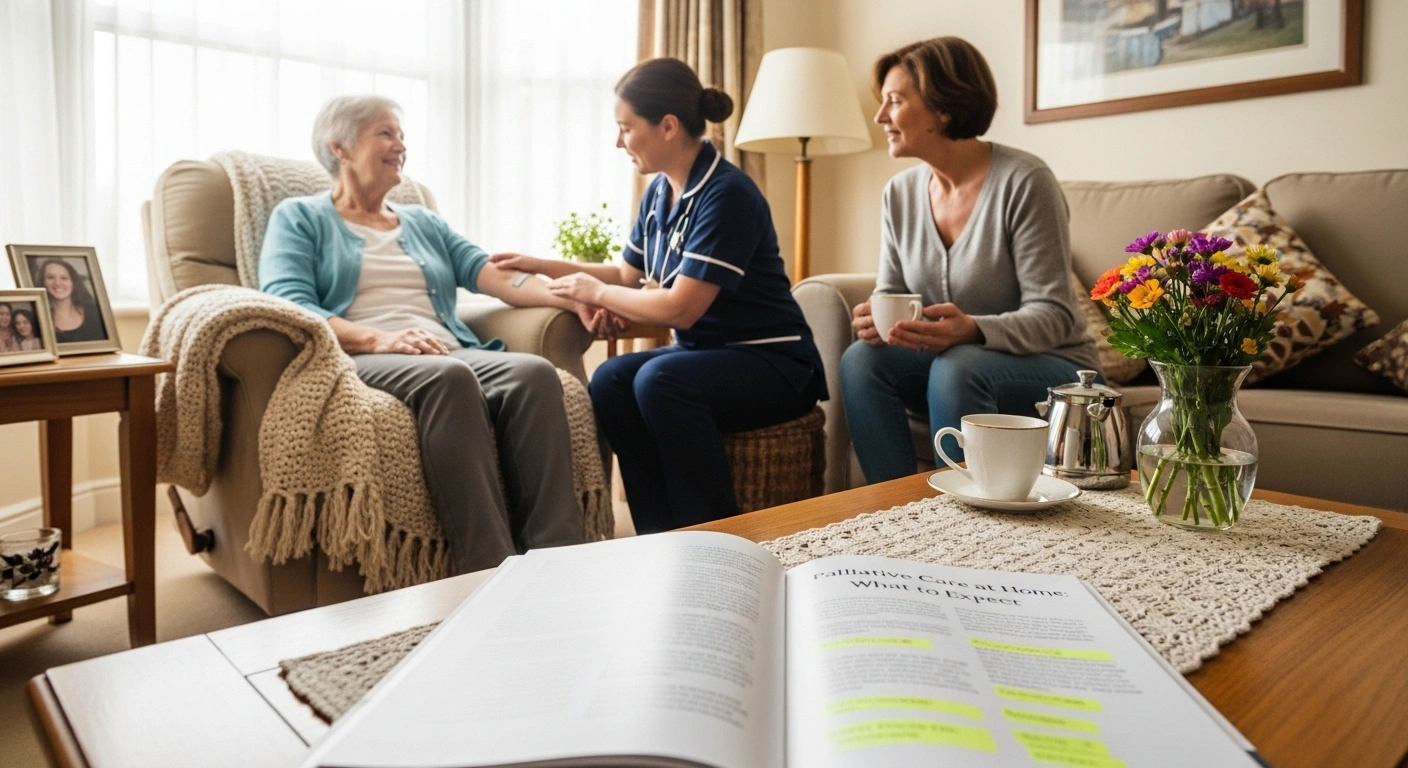
When this care happens at home, it simply means that trained professionals come to your loved one instead of the other way around. They manage pain, look after emotional needs, coordinate with other doctors, and support the entire family.
Key Indicators That It’s Time to Consider Palliative Care
Many families wonder when the “right time” is. The short answer? The earlier, the better.
A 2015 study in the New England Journal of Medicine found that patients who received early palliative care actually lived longer than those with similar conditions who didn’t get it. A 2023 study backed this up, showing that early palliative care made a real difference in quality of life for cancer patients especially those with advanced disease.
Signs Your Loved One May Benefit:
Watch for these indicators:
- Pain that isn’t well controlled or keeps getting worse
- Growing difficulty with daily tasks like bathing, eating, or walking
- Frequent trips to the hospital or emergency room
- Emotional struggles like depression, anxiety, or hopelessness
- Treatment side effects that are becoming hard to handle
- Spiritual distress or a deep need for meaning during illness
Starting the Conversation:
Bringing up palliative care can feel awkward, mainly because many people wrongly link it with “giving up.” Try framing it as extra support.
You might say something like: “I heard about a service that helps people manage pain and feel better while they keep getting treatment would you be open to learning more?” That kind of gentle approach usually goes over much better than a clinical explanation.
Why Do So Many Families Choose Home-Based Palliative Care?
Research shows that roughly 71% of people with a serious diagnosis would rather receive care at home. Here’s why that number is so high.
The Comfort of Familiar Surroundings:
There’s something deeply healing about being in your own space. Your loved one sleeps in their own bed, with their photos on the wall, their favourite blanket, and the smell of their own kitchen. When you’re dealing with serious illness, those comforts become enormous anchors.
Better Mental and Emotional Health:
Hospitals can feel isolating fluorescent lights, constant beeping, unfamiliar faces everywhere. At home, grandchildren can run through the living room, the family dog curls up at their feet, and friends stop by for tea.
A 2020 study on Parkinson’s patients found that those who received palliative care scored 3 points higher on quality of life assessments. Other research showed that early palliative care for people with advanced cancer led to much lower rates of depression.
More Control Over Daily Life:
At home, your loved one gets to decide when they eat, when they rest, and who visits. That sense of independence and dignity matters not just day to day, but for their overall well-being.
Fewer Hospital Visits:
One of the biggest practical benefits is that care at home helps prevent unnecessary ER trips. The team manages symptoms before they get worse, which means less time in waiting rooms and more time actually living.
The Five Guiding Principles of Palliative Care
Every palliative care team works under five core principles. Knowing them helps your family understand what to expect.
- Relieve pain and distressing symptoms. This is the foundation. Whether it’s physical pain, nausea, breathlessness, or fatigue the team’s first job is to bring comfort.
- See dying as a natural process. This doesn’t mean they assume your loved one is dying. It means they approach illness with honesty, facing reality while still focusing on living well.
- Neither speed up nor delay death. Palliative care doesn’t rush anything or drag out suffering. It stays focused on quality of life right now.
- Include psychological and spiritual care. Your loved one is more than their diagnosis. The team pays attention to fears, spiritual needs, family tensions, and questions about meaning.
- Help patients live as actively as they can. Even during serious illness, there can be joy, purpose, and connection. The team works to make those things possible for as long as they can.
Who on the Palliative Care Team?
Most families are surprised by how many professionals might get involved. It’s not a one-person job it’s a full team that works together around your loved one’s needs.
| Team Member | What They Do | How Often They Visit |
|---|---|---|
| Palliative Care Physician | Runs the care plan, manages tough symptoms, talks to other doctors | Every 1–4 weeks |
| Nurse Practitioner or RN | Checks on symptoms, adjusts medications, gives hands-on care | Weekly or more |
| Social Worker | Emotional support, insurance help, advance directives, community resources | As needed |
| Chaplain or Spiritual Advisor | Offers spiritual support no matter the person’s background | As requested |
| Home Health Aide | Helps with bathing, dressing, moving around, and everyday tasks | Several times per week |
| Physical Therapist | Keeps up strength, balance, and mobility | As prescribed |
| Occupational Therapist | Supports daily activities and makes the home safer and easier to navigate | As prescribed |
| Dietitian/Nutritionist | Builds meal plans that support strength and ease symptoms like nausea | As needed |
| Pharmacist | Reviews all medications, watches for bad interactions | Consulted as needed |
| Care Coordinator | Keeps every provider on the same page and handles scheduling | Ongoing |
| Music or Art Therapist | Uses creative approaches to ease anxiety, manage pain, and lift mood | As requested |
| Clinical Psychologist | Provides therapy for depression, anxiety, or adjustment struggles | As needed |
Not every patient needs every person on this list. The team fits around your loved one’s condition and what they actually want.
What Does a Typical Day Look Like?
Don’t picture a parade of medical staff marching through every morning. Most days are actually quite calm.
Morning Routines Stay Familiar:
Your loved one wakes up on their own schedule. A home health aide might come by to help with bathing and getting dressed. Otherwise, mornings look much the same breakfast, medication, some quiet time with the news or out in the garden.
Visits Fit Around Your Life:
Nurse or doctor visits are booked ahead of time, and teams are flexible. A normal week might include one or two nursing visits plus any therapy sessions. Each one usually lasts between 30 minutes and an hour.
Symptom Management Happens in Real Time:
If pain, nausea, shortness of breath, or anxiety flares up, the team adjusts things right away. You don’t have to sit around waiting weeks for a doctor’s appointment. Most programmes also run a 24/7 support line so if symptoms hit at midnight, you can call and get real help from a real person.
Evenings Are for Family:
Once visits wrap up, evenings belong to your family. Dinner together, a favourite show, simple conversation. The team’s whole purpose is to make these moments possible.
Understanding the Stages: From Palliative Care to End-of-Life
Palliative care isn’t one fixed thing. It shifts and changes as your loved one’s condition moves. Here are the key stages.
- Stable Phase: Symptoms are fairly well under control. The team sets up a baseline care plan, and visits may be less frequent. Life feels close to normal, just with extra support in place.
- Unstable Phase: Symptoms start to swing around or new ones pop up. The team gets more active — changing medications, visiting more often, rethinking the care plan. This phase can feel stressful because things are harder to predict.
- Deteriorating Phase: There’s a clear decline. Everyday activities get harder, and the team puts more focus on keeping your loved one comfortable. This is when family conversations about goals of care really matter.
- Terminal Phase (End-of-Life): Palliative care moves into what people often call end-of-life care. This usually happens when a person is expected to pass within weeks or months. Everything narrows down to comfort, dignity, and being present. Active treatment may stop.
- Bereavement Support: Many programmes don’t stop when your loved one dies. Grief counselling, support groups, and follow-up check-ins help families process their loss in a healthy way.
Palliative Care for Patients With Dementia

If your loved one has dementia, palliative care brings some unique challenges.
Decision-Making Challenges
As dementia gets worse, your loved one may lose the ability to make informed choices about their own care. That makes early advance care planning absolutely essential get legal documents sorted while they still have mental capacity.
Communication Difficulties
People with dementia often can’t clearly say when they’re in pain or feeling upset. The care team knows how to read non-verbal signals facial expressions, body language, sudden changes in behaviour.
Behavioural Symptoms
Agitation, wandering, trouble sleeping, and resisting care are all common. The team handles these through medication changes, tweaks to the home environment, and behavioural strategies.
Home Safety Considerations
Dementia often calls for extra safety measures:
- Door alarms to stop wandering
- Stove guards and appliance locks
- Locked medication storage
- Removal of tripping hazards like loose rugs
- Grab bars and non-slip mats in the bathroom
Your occupational therapist can walk through the home and tell you exactly what needs to change.
Palliative Care vs. Hospice Care: Understanding the Difference
This causes more confusion than almost anything else. Here’s a clear side-by-side look:
| Feature | Palliative Care | Hospice Care |
|---|---|---|
| When It Starts | Any stage of serious illness | Life expectancy of 6 months or less |
| Curative Treatment | Keeps going alongside treatment | Active treatment stops |
| Goal | Improve quality of life | Comfort at end of life |
| Duration | Weeks, months, or years | Final weeks or months |
| Who Qualifies | Anyone with a serious illness, any age | Only those with a terminal prognosis |
| Insurance | Medicare Part B, Medicaid, private | Medicare Part A, Medicaid, private |
| Location | Home, hospital, clinic, care facility | Home, hospice, hospital, nursing home |
The simplest way to remember it: all hospice care is palliative, but not all palliative care is hospice.
Specialist vs. General Palliative Care
There are actually two levels of palliative care. Knowing the difference helps you push for the right support.
General Palliative Care
This comes from your loved one’s regular medical team — their GP, oncologist, or other primary doctors. It covers basic symptom control, pain relief, and emotional support. Most patients start here.
Specialist Palliative Care
When things get more complex, a specialist team steps in. These are doctors and nurses with advanced training who take on:
- Pain that’s very hard to control
- Complicated medication combinations
- Tough ethical questions about treatment
- Situations where family disagreements affect care decisions
If you feel that general care isn’t doing enough, ask for a specialist assessment. You have every right to push for it.
How to Set Up Your Home for Palliative Care
A little preparation makes a big difference.
Creating a Comfortable Care Space
Your loved one should ideally have a room on the main floor, close to a bathroom. Keep it well-lit and airy. If mobility is limited, a hospital bed can be set up and insurance usually covers it.
Gathering Essential Equipment
The care team might suggest:
- A hospital bed with adjustable positions
- A bedside commode
- A shower chair or bath bench
- Oxygen equipment
- A wheelchair or walker
- A pressure-relief mattress
Most of these items are covered by Medicare, Medicaid, or private insurance. Your social worker can sort out the details.
Organising Medications Safely
Use a pill organiser. Stick a written medication schedule somewhere everyone can see it the fridge is a classic spot. Keep all medications together in one secure place. If things get confusing, your pharmacist can help simplify the routine.
Preparing the Family
Sit down and have an honest talk about what’s coming, who’ll be the main caregiver, and how everyone will share the load. Planning ahead helps stop caregiver burnout before it starts.
Advance Care Planning: The Legal Documents You’ll Need
This is one of the most important steps your family can take and it works best when you do it early.
What Is Advance Care Planning?
It’s the process of making choices about future medical care before a crisis hits. It makes sure your loved one’s wishes are followed, even if they later can’t speak for themselves.
Essential Documents to Prepare
- Living Will (Advance Directive): Lays out which medical treatments your loved one wants or doesn’t want things like resuscitation, ventilators, feeding tubes, or comfort-only care.
- Durable Power of Attorney for Healthcare: Names one person to make medical choices on your loved one’s behalf if they can’t do it themselves.
- Do Not Resuscitate (DNR) Order: A medical order that a doctor signs, telling medical staff not to perform CPR.
- POLST Form (Physician Orders for Life-Sustaining Treatment): A doctor-signed form that turns your loved one’s care wishes into specific medical orders that first responders can act on right away.
Why Timing Matters
Have these conversations while your loved one is still thinking clearly. If dementia or cognitive decline is part of the picture,time is especially short. The social worker on the palliative care team can walk you through every step.
Telehealth and Technology in Home Palliative Care
Technology has changed the way palliative care works at home. Most families don’t even know what’s out there.
Virtual Check-Ins
Many programmes now offer telehealth visits video or phone calls for medication reviews, symptom updates, or emotional support. They save time and cut down on how many in-person visits you need.
Remote Symptom Monitoring
Some programmes let the care team keep an eye on vital signs and symptoms from a distance. You log daily info through an app or a simple device, and the team gets an alert if something changes.
24/7 Support Lines
Being able to ring a real clinician at any hour is one of the most valuable things about home palliative care. Many families say this one feature knowing someone is always there does more to ease their fear than anything else.
Online Support Groups
The internet also opens up virtual support groups, educational sessions, and online communities where caregivers and patients connect with others going through the same thing. Your social worker can point you toward good ones.
Complementary Therapies: Beyond Traditional Medicine
About 40% of cancer patients who receive palliative care also turn to some form of complementary therapy. These don’t replace medical care they add to it and can make a real difference in comfort.
Massage Therapy
Gentle massage helps ease muscle tension, bring down anxiety, and improve sleep. Many programmes include therapists who know how to work with seriously ill patients.
Music and Art Therapy
Creative therapies give people a way to express emotions that are hard to put into words. Music therapy in particular has been shown to lower pain and ease anxiety.
Acupuncture
Some patients say it helps with nausea especially nausea from chemotherapyalong with chronic pain and fatigue. Medicare covers a limited number of acupuncture sessions for chronic back pain.
Meditation and Mindfulness
Simple breathing exercises and guided meditation help both patients and caregivers handle stress, sleep better, and find some calm during a really uncertain time.
How Much Does Palliative Care at Home Cost?
Money worries keep families up at night. Let’s break it down.
Insurance Coverage
Most insurance plans do cover palliative care. Medicare Part B usually covers doctor and nurse visits, and it may also cover equipment like hospital beds and wheelchairs. Medicaid coverage varies by state — California, for example, now requires its Medicaid managed care organisations to cover community-based palliative care. Private insurance generally covers these services with normal copays and deductibles.
Cost Comparison by Care Setting
| Care Setting | Typical Cost Range | Who Pays |
|---|---|---|
| Home (with insurance) | Low out-of-pocket: copays + 20% coinsurance | Medicare Part B, Medicaid, private insurance |
| Home (without insurance) | Varies a lot depending on what’s needed | Private pay, sliding scale, charitable funds |
| Hospital | Higher because of facility fees | Insurance covers most; copays still apply |
| Hospice Facility | Often free for people with terminal illness | Medicare Part A, Medicaid, charities |
| Nursing Home | Residential costs plus palliative services on top | Insurance, private pay, Medicaid |
Financial Assistance Options
If cost is a worry, look into these:
- Sliding scale fees through palliative care programmes
- VA benefits, including Aid and Attendance
- Long-term care insurance claims
- Health savings accounts (HSAs)
- State assistance programmes
- Grants from nonprofits that help families facing serious illness
Your social worker can help you work through all of these options.
Respite Care: Taking Care of the Caregiver
If you’re handling the day-to-day care, you need breaks. Not as a luxury as a necessity.
What Is Respite Care?
It gives primary caregivers temporary relief. A trained person steps in for a few hours, a full day, or even a couple of weeks so you can rest, take care of your own health, or just breathe.
How to Access It
- Many palliative care programmes include respite as part of their services
- Medicare’s hospice benefit covers up to five straight days in an approved facility
- Home care agencies offer in-home respite options
- Community organisations run volunteer respite programmes
Why It Matters
You can’t pour from an empty cup. Taking time for yourself isn’t selfish it’s what keeps you able to show up for your loved one. If you’re feeling worn out or emotionally shut down, talk to the social worker on the care team. They can set up respite and connect you with counselling.
The Emotional Side: What Families Really Go Through
Even with the best medical team around, this journey hits hard emotionally.
- It’s Okay to Feel Relieved and Sad at the Same Time: When pain is finally under control, you’ll feel a wave of relief. But that relief often comes tangled up with sadness, fear, or guilt. Those mixed feelings are completely normal. You’re not a bad person for feeling relieved you’re a loving one.
- Caregiver Burnout Is Real, Not a Weakness: Exhaustion, short temper, feeling emotionally numb these aren’t signs of failure. They’re signs you’re human. The social workers and counsellors on the team exist to support you too. Please use them.
- Children Need Honesty, Not Protection: Kids pick up on what’s happening whether you tell them or not. Honest, age-appropriate conversations almost always work better than silence. The social worker can help you find the right words.
- Grief Doesn’t Wait: Anticipatory grief mourning before a loss actually happens is incredibly common in families going through palliative care. You might grieve the life your loved one used to have or the future you had pictured together. That grief is real. Talking about it helps, whether that’s with family, a counsellor, or a support group.
How to Get Started With Palliative Care at Home
Getting things moving is easier than most people expect.
- Talk to Your Doctor: Most programmes need a referral from a primary care doctor or specialist. Don’t wait for a crisis starting early makes the biggest difference.
- Find a Provider: Search the Palliative Care Provider Directory at getpalliativecare.org, or just ask your doctor who they’d recommend.
Ask the Right Questions
When you first speak with a provider, make sure to ask about:
- Team availability, especially outside normal hours
- How they schedule visits
- What the care plan process looks like
- How they work with your loved one’s existing doctors
- Whether telehealth options are on the table
- What the costs will look like with your insurance
- Prepare Your Home: Make practical changes before care starts. The team will also come and do an initial assessment, then tell you if anything else needs adjusting.
Final Thoughts
Palliative care at home isn’t the end of the story it’s a way to make every remaining chapter as comfortable, meaningful, and dignified as possible. With the right team beside you, your loved one gets expert support in the place they love most, and your family gets the guidance and breathing room to be fully present. It all starts with one simple conversation with your doctor.