



Picture this. You wake up at 6 a.m., help a loved one bathe and get dressed, sort out their medications, cook breakfast, and manage a doctor’s appointment all before most people have even had their morning coffee.
Somewhere in between all of that, you’re also trying to hold down a job, take care of your kids, and remember who you were before caregiving took over your life.
This is everyday reality for more than 53 million unpaid caregivers in the United States. They’re spouses, adult children, siblings, and close friends quietly holding families together. And almost none of them ask for help.
That’s where respite care comes in. It’s one of the most important and most overlooked forms of support in the caregiving world. This guide breaks down what respite care is, why it matters, who it’s for, and how to use it without drowning in guilt.
What Is Respite Care?
Respite care is temporary relief for primary caregivers. The word “respite” simply means a short break from something difficult, and that’s exactly what this service provides.
When a family caregiver needs time off, respite care steps in to look after the person they normally care for. That person could be an elderly parent with dementia, a child with a disability, a spouse recovering from a stroke, or anyone who depends on daily support.
Think of it like a relay race. Someone else carries the baton for a stretch so you can come back stronger, steadier, and ready to keep going.
The Different Types of Respite Care
Respite care is not one-size-fits-all. It comes in several forms based on what the caregiver needs and what works best for the person receiving care.
Informal Respite Care
This is the most accessible form, and it’s also the one most caregivers already use without realizing it has a name. Informal respite happens when a family member, friend, or neighbor steps in temporarily, usually at no cost.
It can look like this:
- A sibling taking over for a weekend
- A neighbor sitting with an elderly parent for a few hours
- A friend handling grocery runs so the caregiver can get some sleep
Informal care does not come with professional training, but it’s a vital and underestimated part of the support system many families already have around them.
In-Home Respite Care
A trained professional, or sometimes a trained volunteer, comes to your home and takes over caregiving duties for a set amount of time. This type of care usually covers:
- Help with meals and personal hygiene
- Medication reminders and basic monitoring
- Companionship and light supervision
Most families prefer this option because the care recipient stays in a familiar environment, which reduces stress for everyone involved.
Adult Day Programs
Adult day centers run structured programs during daytime hours for older adults or people with disabilities. While the care recipient attends, caregivers are free to work, handle errands, or simply rest.
These programs usually include:
- Social and recreational activities
- Supervised meals and personal assistance
- Health services and therapy in some locations
They tend to cost less than in-home care and offer real social stimulation for the care recipient, which many families find to be an unexpected benefit.
Residential Respite Care
When caregivers need more than a few hours, residential respite places the care recipient in a short-term facility such as a nursing home, assisted living community, or dedicated respite center.
This works well when a caregiver is dealing with:
- Their own surgery or illness
- A family emergency or travel commitment
- Deep emotional exhaustion that needs more than a day to recover from
Emergency Respite Care
Life does not always give warnings. Emergency respite is for sudden, unplanned situations, like a caregiver being hospitalized, a family crisis, or a moment when continuing simply is not safe. These programs move quickly to make sure no one is left without support.
Virtual and Technology-Base Respite Care
This option grew during the COVID-19 pandemic and is now becoming a mainstream choice. Virtual respite uses video platforms to provide real-time supervision and companionship to care recipients from a remote location. Some programs send a “respite in a box,” which includes activity kits with puzzles, art supplies, and links to virtual museum tours or recorded concerts.
This works especially well for:
- Caregivers in rural areas with few local options
- Families who need flexible and low-barrier access to breaks
- Situations where the care recipient is uncomfortable with strangers in the home
Caregiver Retreat Programs
Some nonprofit organizations offer structured wellness retreats where caregivers get a break while also attending supportive programming. Some of these programs even provide grants that cover lodging, meals, and transportation, making them far more accessible than most people expect.
| Type | Best For | Duration | Setting |
|---|---|---|---|
| Informal (Family/Friends) | Quick, low-cost breaks | Hours to a day | Home or community |
| In-Home Respite | Regular scheduled breaks | Hours to days | Care recipient’s home |
| Adult Day Programs | Working caregivers | Daytime hours | Community center |
| Residential Respite | Extended or emergency breaks | Days to weeks | Care facility |
| Emergency Respite | Sudden caregiver unavailability | Immediate | Flexible |
| Virtual/Tech-Based | Rural or accessibility needs | Hours | Remote or home |
| Caregiver Retreats | Burnout prevention and wellness | Weekend to a week | Retreat center |
Why Respite Care Matters: The Truth About Caregiver Burnout
Here is something the caregiving world does not say loudly enough. Caregivers get sick too.
They get exhausted, depressed, and burned out, and when that happens, everyone suffers, including the person they care for. The numbers paint a clear picture:
- Nearly 45% of caregivers say caregiving has negatively affected their own health (AARP, 2023)
- Adult children in caregiving roles spend an average of 77 hours per month on care, which is close to two full work weeks
- Family caregivers experience significantly higher rates of depression and anxiety than people who are not caregiving
- Many give up their own medical care, sleep, and social life to keep showing up for someone else
Caregiver burnout is not a character flaw. It is what happens when a person carries too much for too long without a break.
Research shows that caregivers who use respite services report lower stress, better physical health, stronger relationships with their care recipients, and a lower chance of needing to place a loved one in permanent institutional care. Respite care does not just help the caregiver. It protects the quality of care the recipient gets over the long run.
Do Not Wait Until You Are Burn Out: Use Respite Care Early
One of the most damaging myths about respite care is that you only need it when things have fallen completely apart. The truth is that respite care works far better as a regular habit than as a last resort.
Many caregivers look back and wish they had asked for help sooner. Waiting until burnout hits makes recovery much harder and longer. Think of it like sleep. It is much easier to stay rested with consistent rest than to bounce back from weeks of running on empty.
A few things that genuinely help:
- Try to schedule a break at least once a week, even if it is just a few hours
- Start small if that is all you can manage. Even one afternoon a month gives you something to look forward to
- Build a regular rhythm early so your loved one gets used to the arrangement over time
- Treat respite as part of the care plan, not as something you earn when things get bad enough
Starting before burnout sets in is one of the smartest things a caregiver can do for both themselves and the person they love.
The Emotional Barriers: Why Caregivers Do Not Ask for Help
Knowing respite care exists and actually using it are two very different things. Most caregivers hold back, not because help is not available, but because of very human emotional walls.
Guilt Comes First
“I am their family. I should be able to handle this.” Guilt is the number one reason caregivers push through without support. The belief that taking a break means you do not love someone enough is deeply rooted in many families and cultures. But it is not true. Taking care of yourself is what makes long-term caregiving possible.
Fear of Judgment
Many caregivers worry about what family members or neighbors will think if they bring in help. Those imagined judgments often exist only inside the caregiver’s head, but they feel real enough to stop people from acting.
Not Knowing Help Exists
A large number of caregivers simply do not know that respite care is a real, accessible service. Doctors rarely bring it up. Insurance does not highlight it. The information gap keeps millions of caregivers isolated when real support is within reach.
The Feeling That Nobody Else Can Do It Right
Some caregivers hesitate because their daily routine feels too complicated to hand off to someone new. This feeling usually means a break is already overdue. Starting with shorter visits lets a new caregiver learn the routine at a manageable pace, and the handoff stress fades quickly with repetition.
Who Qualifies for Respite Care?
Respite care is available in a much wider range of situations than most people think. You may be able to get support if you are caring for:
- An elderly parent or grandparent with age-related conditions
- A child or adult with a physical, intellectual, or developmental disability
- A family member with a serious mental illness
- A loved one recovering from major surgery or a medical event
- A spouse or partner with a condition like Alzheimer’s, Parkinson’s, or ALS
There is no single income cutoff or required diagnosis. Eligibility depends on the program and funding source, but options exist across income levels and care situations.
How to Access Respite Care
Finding the right program does not have to feel overwhelming. Here are the most reliable places to start.
Start With Your Local Area Agency on Aging
Every region in the U.S. has an Area Agency on Aging that connects families with local services, often at reduced or no cost. Call the Eldercare Locator at 1-800-677-1116 or visit eldercare.acl.gov to find yours.
Use the ARCH National Respite Locator
The ARCH National Respite Network runs a free locator at archrespite.org that helps caregivers find state-specific programs. It is one of the most complete starting points available.
Check Medicaid and State Waiver Programs
Medicaid’s Home and Community-Based Services waivers often cover respite care for eligible individuals. Many states also run their own caregiver support programs with respite funding built in. A direct call to your state’s Medicaid office is worth the time.
Contact Disease-Specific Organizations
Many diagnosis-specific organizations have their own respite resources or local referrals:
- Alzheimer’s Association – helpline and local chapter support
- Autism Speaks – family services and community referrals
- Muscular Dystrophy Association – caregiver support programs
- National Alliance on Mental Illness (NAMI) – caregiver resources and peer groups
Ask Your Employer About EAP Benefits
Many Employee Assistance Programs include caregiver support services, sometimes with referrals to or partial funding for respite care. A quick call to HR often uncovers benefits caregivers did not know they had.
Explore Veterans’ Programs
If the person you care for served in the military, the VA offers dedicated respite benefits through the Program of Comprehensive Assistance for Family Caregivers and the Veteran-Directed Care program. Call 1-855-260-3274 or visit your nearest VA medical center to find out what is available in your area.
How to Prepare Your Love One for Respite Care
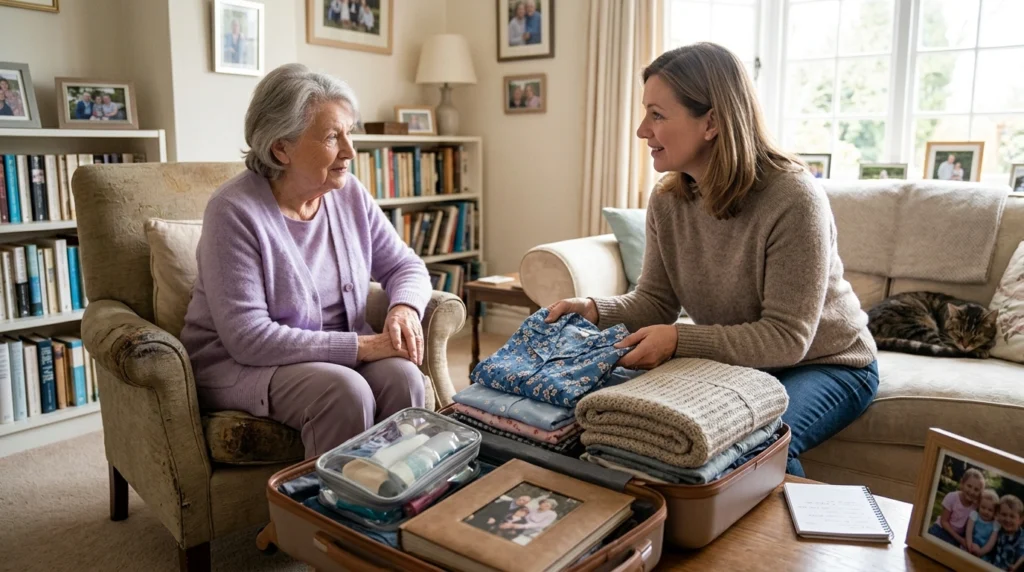
This is one of the most practical steps in the entire process, and almost no other guide covers it. Many caregivers avoid respite care not because they do not want a break, but because they are worried about how their loved one will handle the change. With some thoughtful preparation, the transition is usually much smoother than expected.
Introduce the Idea Gradually
Do not surprise your loved one with a new caregiver. Have the new person visit while you are still at home first, keeping the tone casual and friendly. Let your loved one get comfortable with the new face before you actually step out.
Use Warm, Casual Language
The way you talk about respite care matters more than most people realize. Instead of “someone else is coming to take care of you today,” try something like “my friend Sarah is stopping by to spend some time with you.” Simple and warm framing keeps the situation from feeling alarming.
Write a Simple Care Guide
Put your loved one’s daily routine, preferences, medications, triggers, comfort items, and emergency contacts into one clear document. This does several things at once:
- Reduces your stress during the handoff
- Gives the respite caregiver the confidence to handle things well
- Helps you see your own routine more clearly, which is often a useful exercise in itself
Stick to Familiar Routines
Ask the respite caregiver to keep things as normal as possible during early visits. A favorite TV show, a regular mealtime, a usual walk familiar activities provide comfort and help your loved one warm up to the new caregiver faster.
How to Make the Most of Your Respite Time
This is the step most guides leave out completely. They tell caregivers to take a break but say nothing about what to actually do with it. Many caregivers spend their respite time running errands, staring at their phones, or feeling guilty, and they end up feeling like the break did not help at all.
Do Not Fill Every Hour With Tasks
Errands have their place, but if every free hour goes to a to-do list, you have switched tasks rather than actually rested. Make it a rule that at least half your respite time belongs to you, not your household.
Reconnect With Who You Were Before Caregiving
Think back to what you enjoyed before this role took over. Some things that work well:
- A long, uninterrupted walk or run
- Reading a book with no timer on it
- Coffee or lunch with a friend you have not seen in a while
- A fitness or yoga class
- Gardening, cooking something new, or any creative outlet you have let go
These are not small things. They are how you hold on to your sense of self, and that is what makes you a better caregiver when you come back.
Give Yourself Permission to Be Unreachable
This is harder than it sounds for most caregivers. The low-grade anxiety of being away is real. But unless there is a genuine emergency, the person you care for is in good hands. You set it up. Trust it, and let yourself actually rest.
Connect With a Peer Support Group
Spending some of your respite time with other caregivers, whether in person or online, offers a kind of relief that solo rest cannot. Talking with people who genuinely understand your situation helps more than most caregivers expect. Good places to start:
- Family Caregiver Alliance – support groups and online community
- AARP Caregiver Community – forums and local chapter meetups
- Caregiver Action Network – peer programs and advocacy resources
Respite Care and Its Impact on the Person Being Care For
Something caregivers often miss is that respite care can be genuinely good for the person receiving it too. New faces, social activity, different surroundings, and a change from the usual dynamic can be refreshing and even therapeutic.
Adults with dementia often do well in adult day programs where structured activities, music, and peer interaction help reduce agitation and lift mood. Cognitive health is directly connected to social engagement and mental stimulation, and respite environments are built to provide both.
Children with disabilities often enjoy the variety that respite settings offer, along with the chance to build relationships outside the immediate family. A good break is not just something the caregiver needs. Often, it is something the care recipient genuinely benefits from too.
Final Thoughts
Respite care is not something you earn after hitting rock bottom. It is a practical tool that works best when you use it early, use it often, and stop apologizing for needing it. Whether it is a neighbor watching your dad for two hours or a week in a short-term facility, every break you take is an investment in the care you are able to give. You do not have to earn rest. You just have to let yourself have it.