

If you’re reading this, chances are you’re caring for someone you love. Maybe it’s a parent, a spouse, a sibling, or a close friend. And if you’re like millions of other family caregivers out there, you probably haven’t taken a real break in weeks maybe even months.
Here’s what nobody tells you when you step into this role: taking care of yourself isn’t selfish. It’s survival. And that’s exactly where respite care comes in.
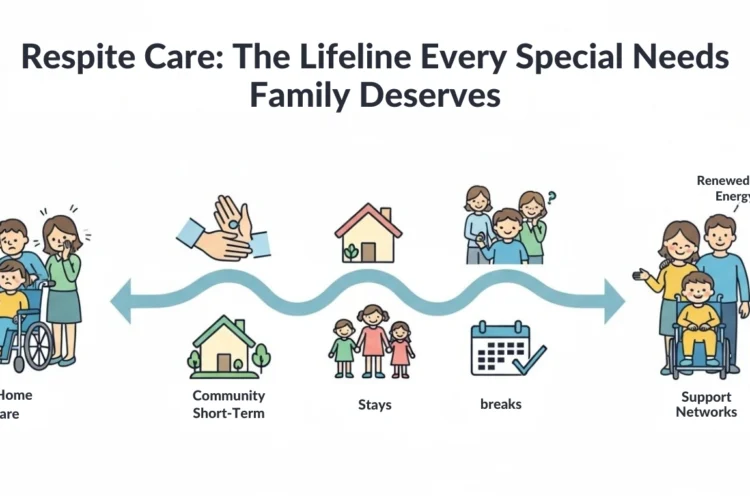
So what is respite care? It’s a temporary caregiving service that gives you the family caregiver a chance to step away, catch your breath, and look after your own health. It could last a few hours, a couple of days, or even a few weeks. Your loved one stays safe and well cared for while you get the time you desperately need.
The Caregiving Crisis Nobody Talks About Enough
Caregiving in America has quietly turned into an exhaustion epidemic. And the numbers tell a tough story.
According to the National Alliance for Caregiving and AARP’s 2025 report, roughly 24% of U.S. adults now serve as caregivers. That’s one in every four people. On top of that, the demands have grown more intense 55% of caregivers now handle medical or nursing tasks beyond everyday help.
A 2025 survey by A Place for Mom painted an even starker picture:
- 78% of family caregivers said they’ve experienced burnout, often on a weekly or even daily basis
- 87% reported dealing with stress and anxiety at some point
- 84% said they’ve felt overwhelmed by their responsibilities
- 64% are also holding down full-time or part-time jobs alongside caregiving
On average, a family caregiver puts in about 22.8 hours per week. Nearly 30% spend more than 30 hours on it. And when it comes to money, caregivers spend roughly $7,200 a year out of their own pockets, while 71% say they’re struggling financially.
These aren’t just numbers on a page. They represent real people who skip their own doctor’s appointments, lose touch with friends, and lie awake at night worrying about what happens if they get sick too.
What Exactly Is Respite Care?
Think of respite care as a structured, reliable, and safe break. Your loved one keeps getting quality care while you step away and take a breath.
If you’ve ever been so tired that you forgot to eat, snapped at someone for no real reason, or felt a wave of resentment followed by crushing guilt your body was waving a red flag. Respite care is there to catch you before you hit the wall.
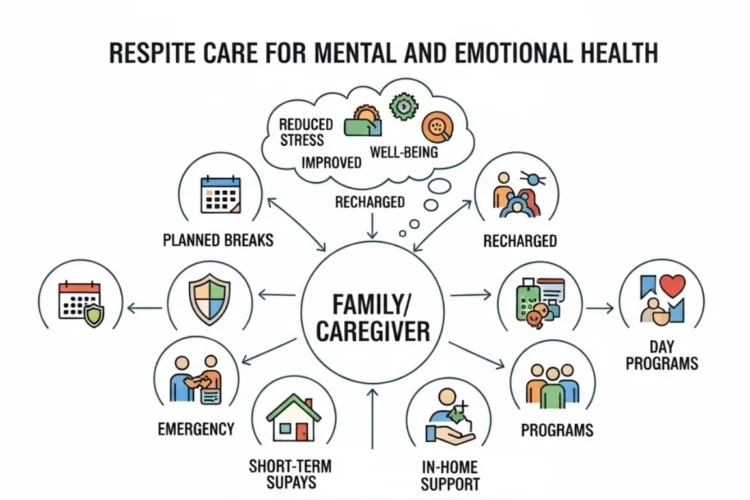
You can arrange it ahead of time for regular breaks, or set it up on short notice during an emergency. The length is totally flexible a few hours so you can get to a doctor’s appointment, or a few weeks to recover from surgery or simply recharge after years of nonstop caregiving.
Here’s one important distinction worth making: having someone watch your loved one while you run errands isn’t really respite. That’s just help. True respite means time for you to rest, to see a friend, to nap, or to do absolutely nothing without rushing back.
Signs You Need Respite Care
Most caregivers don’t realize they need a break until they’re already deep in burnout territory. Take a look at this list. If three or more of these sound like you, it’s time to seriously look into respite care:
- You feel physically drained most days, even after a full night’s sleep
- You’ve given up hobbies or activities you used to love
- You snap at the person you’re caring for and then feel awful about it
- You keep putting off your own medical appointments
- You feel cut off from friends and family
- You struggle to fall asleep or stay asleep, even when you get the chance
- You’ve gained or lost weight without meaning to
- You feel resentful about your caregiving role, then immediately guilty
- You get anxious the moment you step away, even for a short time
- You honestly can’t remember the last full day you had just for yourself
If you’re nodding along, please hear this: you’re not weak. You’re not failing. You’re just human. And every human being needs a break now and then.
Types of Respite Care: Find What Works for You
Respite care doesn’t come in just one shape or size. Different families have different needs, budgets, and comfort levels. Here’s a closer look at your main options.
Informal Respite Care:
This is the simplest starting point. A trusted family member, friend, or neighbor steps in for a few hours or a day. It usually costs nothing and works best when your loved one already has a relationship with that person.
The downside? It depends on having people who are both available and willing. Not everyone has that luxury. One helpful tip is to set up a shared Google Calendar so multiple people can rotate shifts. When the responsibility gets spread around, nobody burns out, and you get more regular and predictable breaks.
In-Home Professional Respite Care:
With this option, a trained caregiver comes directly to your home. It works especially well for people living with dementia or Alzheimer’s, because staying in a familiar environment keeps confusion and anxiety low.
In-home care comes in different levels, depending on what your loved one needs:
- Companion care (~$30/hr): Best for someone who’s mostly independent but shouldn’t be left alone
- Homemaker care (~$30/hr): Adds help with meal prep, light cleaning, and errands
- Home health aide (~$33/hr): Covers personal care like bathing, dressing, and toileting
- Skilled nursing ($25–$130/hr): Handles medical needs like wound care, medication management, and monitoring
Adult Day Care Centers:
These centers offer a safe and social daytime environment with meals, activities, supervision, and some health services. The average cost sits between $78 and $95 per day.
They’re especially helpful when it comes to fighting loneliness and keeping the mind active. Your loved one gets meaningful engagement and stimulation while you finally get some breathing room.
Residential or Facility-Based Respite Care:
When you need a longer break maybe you’re traveling, recovering from an illness, or just completely tapped out assisted living communities and nursing homes offer short-term stays lasting anywhere from a few days to about 30 days.
- Assisted living: Averages around $176 per day
- Nursing home: Runs between $285 and $320 per day, depending on the room
Everything gets taken care of at the facility. There’s no need to move furniture or sort out complicated logistics. Your loved one receives round-the-clock professional attention.
| Feature | Informal Care | In-Home Professional | Adult Day Center | Residential Facility |
|---|---|---|---|---|
| Setting | Your home | Your home | Community center | Assisted living or nursing home |
| Duration | Hours to a day | Hours to weeks | Daytime hours | Days to weeks |
| Average Cost | Usually free | $25–$130/hour | $78–$95/day | $176–$320/day |
| Best For | Short breaks | Dementia or Alzheimer’s | Daytime relief | Extended breaks or medical needs |
| Professional Staff | No | Yes | Yes | Yes |
| Social Opportunities | Limited | Limited | High | High |
| Medical Support | No | Varies | Some | Yes |
| Overnight Available | Sometimes | Yes | No | Yes |
| Insurance Coverage | N/A | Rarely | Some Medicaid programs | Medicare hospice or Medicaid waivers |
Why Respite Care Is a Lifeline and Not a Luxury
A lot of caregivers feel like asking for help somehow means they’ve failed. It doesn’t. Study after study shows that caregivers who use respite services experience less distress and report better overall health. Yet only about 14% of caregivers who actually want respite end up getting it.
That gap usually comes down to three things: guilt, lack of awareness, or simply not knowing where to begin.
Protecting Your Mental Health:
Roughly 33% of informal caregivers deal with depression. Close to 29% face significant anxiety. And only 23% say their mental health is in “good” shape.
Respite care gives you space to process what you’re feeling, talk to a counselor if you need one, and simply decompress. When you come back rested, you’re more patient, more present, and more emotionally available for your loved one. That’s not a luxury that’s what makes long-term caregiving possible.
Keeping Your Body in Shape:
Let’s face it caregiving is physically punishing. You’re lifting, transferring, cooking, cleaning, managing medications, and driving to appointments. Your body takes a real beating. Nearly a quarter of caregivers say their role has made it hard to look after their own health. And among caregivers aged 65 and older, more than 53% have two or more chronic diseases.
A CDC study found that caregivers fared worse than non-caregivers on 13 out of 19 health indicators. That’s a wake-up call. Respite care gives you the time to schedule that overdue checkup, go for a walk, eat a proper meal, or just sleep for eight uninterrupted hours.
Keeping Your Relationships Alive:
When every ounce of your energy goes to caregiving, everything else starts to fade. Friendships get neglected. Your marriage takes a hit. You start losing touch with who you were before all of this started.
Respite gives you the chance to reconnect dinner with your partner, coffee with an old friend, your kid’s school play. These connections keep you grounded and remind you that your identity doesn’t begin and end with caregiving.
Becoming a Better Caregiver:
This might sound backwards, but stepping away actually makes you better at what you do. When you’re burned out, you run on fumes. You miss things. You lose your patience. You make mistakes.
A well-rested caregiver notices more, reacts with more compassion, and makes sharper decisions. Taking breaks doesn’t mean you care any less it means you’re setting yourself up to keep caring for the long haul.
How Your Loved One Benefits Too
Respite care isn’t a one-way street. The person you care for gets real benefits as well.
Fresh Social Connections:
A lot of care recipients, especially older adults, deal with isolation and loneliness. Respite care brings in new faces, new conversations, and new experiences. For people living with dementia, that kind of social stimulation can genuinely help maintain cognitive function.
A Different Set of Eyes on Their Care:
A professional respite provider might catch something you’ve missed or introduce a technique that makes a daily task easier. They can also give you an objective read on your loved one’s condition, which is incredibly helpful for long-term care planning.
A Low-Pressure Trial Run:
If you’ve been thinking about assisted living down the road, a short respite stay is a great way to test the waters. Your loved one gets a feel for community living, and you get a real sense of whether a particular place would be a good fit all without committing to a permanent move.
Respite Care for Specific Conditions
What your loved one needs from respite care depends heavily on their condition. A cookie-cutter approach just doesn’t cut it here.
Dementia and Alzheimer’s Disease:
Familiarity matters more than anything. In-home respite usually works best. Make sure whoever steps in has proper training in dementia care and understands things like sundowning, redirection, and wandering behavior. Adult day centers with dedicated memory care programs are another solid choice.
Physical Disabilities and Mobility Challenges:
Your respite provider needs to be confident handling transfers, assistive devices, and accessibility needs. If you’re looking at a facility, confirm it’s ADA-compliant and set up for wheelchairs, walkers, or whatever equipment your loved one depends on.
Chronic Illness and Medical Complexity
When your loved one requires ongoing monitoring oxygen management, dialysis schedules, wound care, or complex medications you need skilled nursing respite, not companion-level help. Always confirm that the provider can handle the specific medical protocols involved.
Mental Health Conditions:
Caring for someone with schizophrenia, bipolar disorder, or severe depression comes with its own unique emotional weight. Look for respite providers trained in mental health first aid and de-escalation techniques.
What Gets in the Way of Accessing Respite Care
Even when you know you need a break, real-world obstacles can block the path. Here are the biggest ones and what you can do about them.
Not Knowing It Exists:
A surprising number of caregivers have never even heard of respite care as a formal service. If this article is your first time learning about it, you’re in good company. Talk to your loved one’s doctor, a social worker, or your local Area Agency on Aging to find out what’s available near you.
Waitlists:
Government-funded respite programs often have more demand than they can handle. The smart move is to get your name on those lists early well before you’re in crisis mode. Being in the system means faster access when the time actually comes.
Guilt:
Guilt stops more caregivers from getting help than money or availability ever will. Try to reframe respite as something you’re doing for your loved one, not against them. You’re protecting your ability to keep showing up.
Living in a Rural Area:
Fewer providers, longer distances, and limited community programs make things harder for rural caregivers. The ARCH National Respite Network has a locator tool that can help you find options even in underserved areas. Technology and telehealth can also fill some of the gaps.
Money:
Cost is a real concern. But there are more funding options out there than most people think. Don’t let assumptions hold you back read the next section carefully.
How to Pay for Respite Care
Most private insurance plans won’t cover respite care. But that doesn’t mean you’re out of options.
Government Programs:
Medicaid waiver programs in many states do cover respite care for people who qualify. Get in touch with your state’s Medicaid office and ask about home and community-based service waivers. The National Family Caregiver Support Program also funds respite services in many communities across the country.
Medicare:
Traditional Medicare only covers respite care for hospice patients up to five days in a row at a time. That said, some Medicare Advantage plans offer broader coverage, so it’s worth checking the details of your specific plan.
Veterans Benefits:
If your loved one served in the military, the VA provides up to 30 days of respite care per year in approved facilities.
Volunteer and Community Resources:
You might be surprised at how much free or low-cost help is out there:
- National Volunteer Caregiving Network: Pairs volunteers with caregivers who need a break
- 2-1-1 Helpline: Available around the clock to connect you with local resources
- ARCH National Respite Locator (archrespite.org): A searchable directory of respite services
- Faith-based and community organizations: Many offer free or affordable respite support in your area
Your Rights as a Working Caregiver

If you’re one of the 64% of caregivers who also hold a job, you should know about the legal protections available to you.
The Family and Medical Leave Act (FMLA):
FMLA gives eligible employees up to 12 weeks of unpaid, job-protected leave per year to care for a spouse, child, or parent with a serious health condition. Not everyone qualifies there are employer size and hours-worked requirements but if you do, it can protect your position during a caregiving crisis.
State Paid Family Leave:
Several states now offer paid family leave programs that cover time off to care for a seriously ill family member. California, New York, New Jersey, Washington, and a growing number of others have these in place. Check your state’s labor department website for the specifics.
Employer Accommodations:
More and more companies are waking up to the reality that their employees are also caregivers. Options you might not know about include:
- Flexible or adjusted work schedules
- Remote or hybrid work arrangements
- Employee assistance programs with built-in caregiver support
- Backup care benefits for emergency situations
Don’t be afraid to have that conversation with HR. The number of working caregivers has jumped to one in five adults up from one in seven back in 2020. Employers are paying attention now.
Getting Past the Guilt
You can know you need a break and still struggle to take one. That’s how guilt works. It whispers things like, “Nobody can care for them the way I do,” or “What if something goes wrong while I’m gone?” or “I should be stronger than this.”
Sound familiar? Then think about it this way: if you collapse from exhaustion or land in the hospital because you’ve been ignoring your own health, who takes care of your loved one?
Stepping away doesn’t mean you’re abandoning anyone. It means you’re protecting your ability to keep showing up. Many caregivers who finally try respite care say their only regret is that they didn’t do it sooner.
Build an Emergency Respite Plan Now
Most people only think of respite as something they schedule in advance. But what happens if you get hurt, fall sick, or face a sudden emergency? Planning ahead saves you from scrambling later.
- Put Together an Emergency Contact List: Identify at least two or three people who could step in on short notice family, close friends, trusted neighbors. Share your loved one’s care plan with them now, while things are calm. Don’t wait until you’re calling from an emergency room.
- Sign Up for Emergency Respite Services: Many communities run emergency respite programs designed for unexpected situations. Your Area Agency on Aging can tell you what’s available locally. The 2-1-1 helpline can also point you to emergency support any time, day or night.
Keep a Ready-to-Go Care Binder
Put together a folder or binder with everything someone would need to step in quickly:
- Current medications and dosages
- Insurance cards and policy numbers
- Emergency contacts with phone numbers
- Your loved one’s daily routine, step by step
- Dietary restrictions and food preferences
- Contact details for doctors and specialists
If something unexpected happens and someone needs to take over fast, this binder means they won’t be calling you for every little detail.
Final Thoughts
Caregiving is one of the most generous and demanding things you’ll ever do. The love behind it is real, and so is the toll it takes on your body, your mind, and your life. Respite care isn’t about giving up or giving in it’s about making sure you can keep showing up as the person your loved one needs you to be. You don’t have to earn a break by hitting rock bottom first. Look into your options today, make that call, and let someone help you for a change. Your loved one needs you healthy, rested, and whole. And you deserve exactly that.